
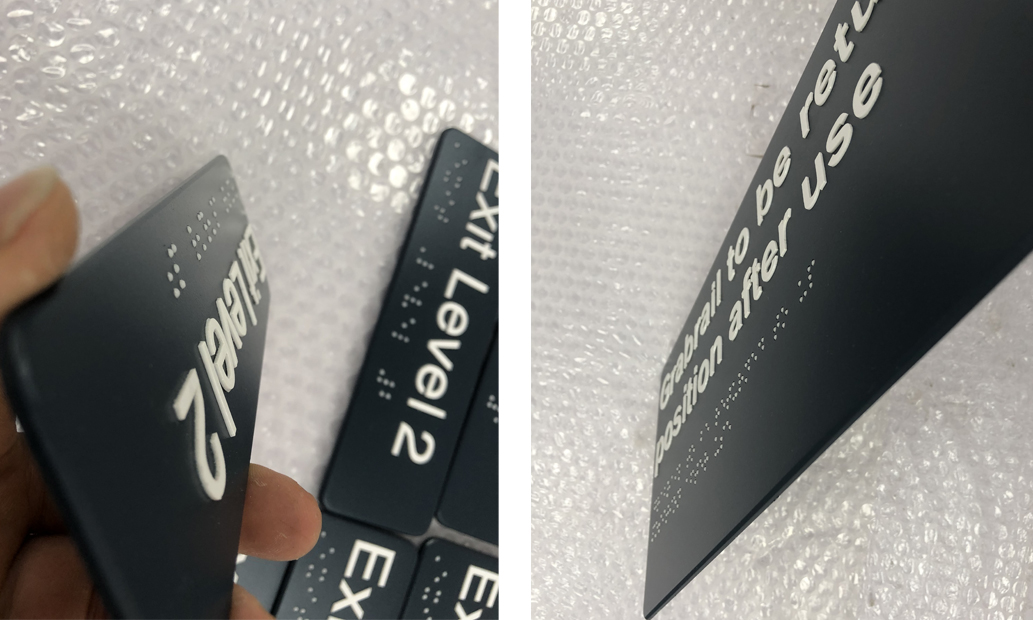
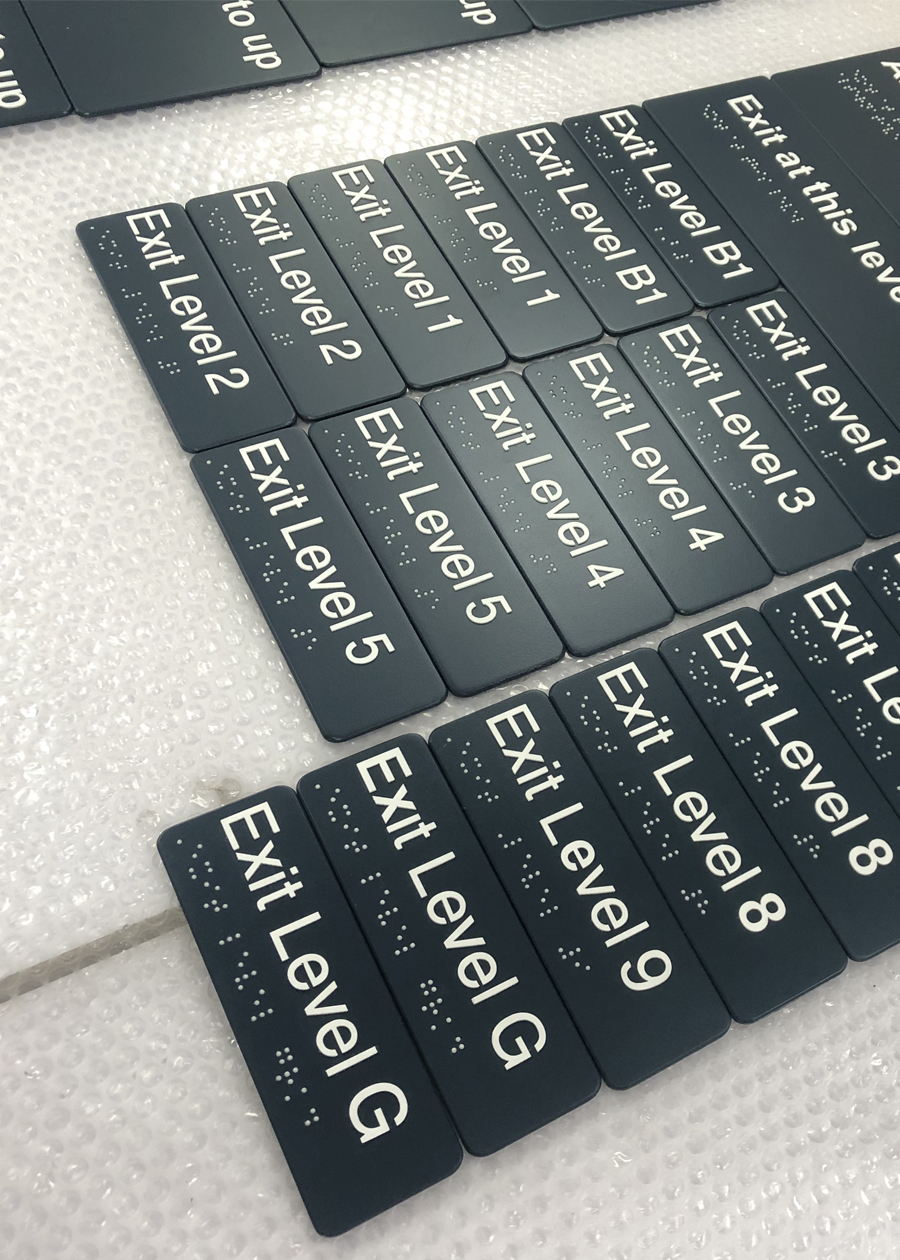
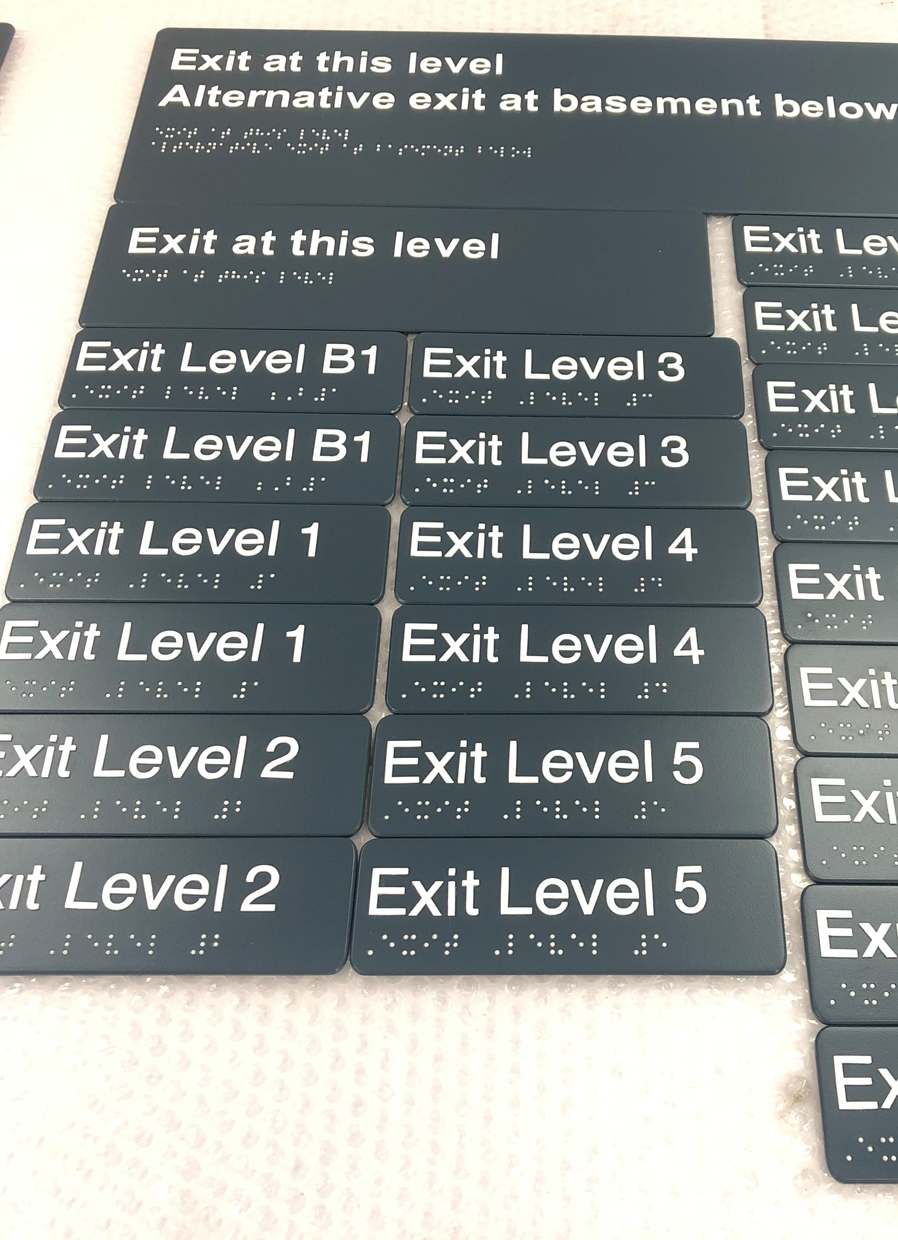
A guide sign specially designed and made for people with disabilities

The distribution structure of floors, barrier-free flow guide maps, and an overview of barrier-free facilities are displayed in two forms: visual maps and braille maps.

1. Choose the appropriate material

Typically, braille signage can be made from materials such as metal, wood, plastic, and acrylic. Among these, metal signage tends to have a longer lifespan, while wood signage can be more challenging to maintain. Plastic signage is less durable, while acrylic signage is durable but slightly more expensive.

2. Appearance

Colors should be eye-catching and possess sufficient contrast. Common color combinations include yellow and black, blue and white, and other obvious color contrasts.

3.Feel

A good texture can provide blind people with intuitive information. The surface of braille cards should be smooth and evenly textured, without sharp edges or corners to avoid injury.

Summary:

The material, appearance, and texture of braille cards must be comprehensively considered, and appropriate materials and craftsmanship should be selected to achieve long lifespan, robust stability, aesthetic appearance, and ease of maintenance.